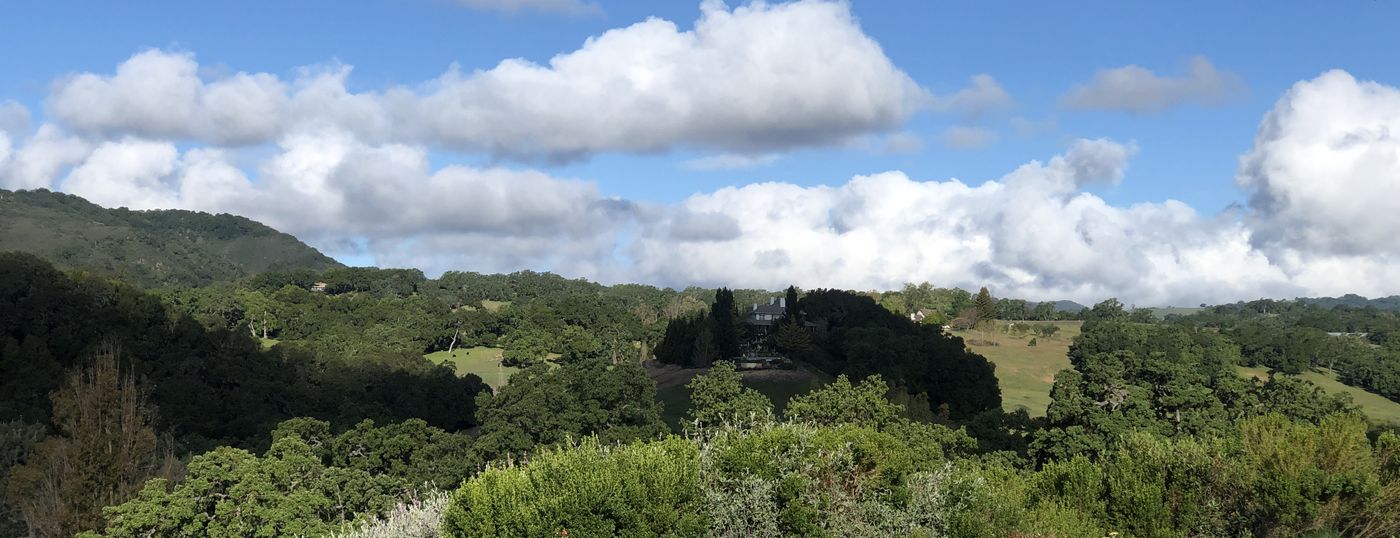
Buying Rural & Wine Country Property in Paso Robles
Water, wastewater, access, acreage, fire and insurance — the due diligence that rural Central Coast property actually requires.
Buying rural property around Paso Robles is a different exercise from buying a house in town. The building inspection is the smaller half of the job. The larger half is the land: where the water comes from, where the wastewater goes, how you legally get to the property, what you are allowed to do there, and whether you can insure it.
None of this is a reason to avoid rural property. It is a reason to build a longer contingency period and work through the list deliberately.
Scope of this page
This is general educational information written by a real estate broker. It is not legal, engineering, hydrological, environmental, insurance or tax advice. Well capacity, septic adequacy, easement interpretation, zoning, groundwater regulation and hazard designation are all parcel-specific and change over time. Confirm everything material with San Luis Obispo County, the relevant state agency, and qualified licensed professionals.
Water
Where the water comes from
A rural parcel may be served by a private well, a shared well used by several parcels under an agreement, a small community water system, or in some locations a municipal or district connection. Each carries different obligations. A shared well in particular is a legal arrangement as much as a physical one: there should be a recorded agreement covering cost sharing, maintenance responsibility, repair decisions and what happens if the well fails. If no written agreement exists, that is itself a finding.
Well condition, yield and quality
On a well-served property, the questions are separate and all worth answering: How deep is the well and when was it drilled? What is the sustained yield, measured by an actual flow test rather than a recollection? Is there storage, and how much? What is the condition of the pump, pressure tank, wiring and casing? And what does a current water quality test show?
Water quality from private wells is not monitored by any outside agency — testing is the owner’s responsibility. San Luis Obispo County Environmental Health Services administers the county well program, including construction and destruction permits, and publishes information for private well owners.
Groundwater and the Paso Robles subbasin
Much of the area around Paso Robles lies within the Paso Robles Area Subbasin of the Salinas Valley Groundwater Basin, managed under California’s Sustainable Groundwater Management Act (SGMA) through an adopted Groundwater Sustainability Plan. County land use requirements have applied within the basin area over time, and those requirements have been added, modified and allowed to expire at different points.
Because these rules genuinely change, do not rely on a summary — including this one. Confirm the current requirements applicable to a specific parcel with San Luis Obispo County directly.
Septic and onsite wastewater
Rural properties typically use an onsite wastewater treatment system rather than a sewer connection. In unincorporated San Luis Obispo County these systems are permitted and regulated by the county Planning and Building Department under a Local Agency Management Program adopted in coordination with the Central Coast Regional Water Quality Control Board.
What to establish before closing:
- System type, location and age, and whether it was permitted
- Condition, verified by inspection — typically including pumping the tank so it can be assessed
- Capacity relative to the number of bedrooms, and what that means if you intend to add one
- Leach field location and condition, and whether a replacement area exists on the parcel
- Whether any component is a type no longer permitted for new installation
- Maintenance and pumping records
Septic capacity is one of the most common practical constraints on rural expansion plans. If your intention is to add bedrooms, a guest unit or an accessory dwelling, the wastewater question needs to be answered before you buy, not after.
Access, roads and easements
Legal access
Confirm that the property has legal access, recorded, and not merely a driveway that has been used for years. The preliminary title report and the underlying recorded documents are where this is established. Historic use is not a substitute for a recorded right.
Private and shared roads
Many rural parcels are reached by private or shared roads that no public agency maintains. Ask who maintains the road, whether there is a recorded maintenance agreement, how costs are shared, what the road surface and grade are like in wet weather, and whether it is passable by emergency vehicles, delivery trucks and a moving van.
Road maintenance obligations can also affect financing on some loan programs. Raise it with your lender early.
Easements
Easements run in both directions. Others may hold rights across the property — for access, utilities, water lines or agricultural use — and the property may hold rights across neighboring land. Both matter. An easement can determine where you may build, where you may fence, and what you cannot obstruct. Read the actual recorded documents rather than relying on a summary in the title report.
Utilities
Verify what exists at the parcel rather than what is nearby. Electricity may require a service extension at meaningful cost. Natural gas is generally unavailable rurally; propane is common, and the tank may be owned or leased — find out which. Internet options vary substantially by location and terrain. Confirm trash service, mail delivery and address assignment.
Acreage, boundaries and topography
Fence lines are not boundaries. Where a boundary matters — for a building plan, a dispute, an encroaching structure or a purchase priced on acreage — a survey by a licensed land surveyor is the answer, and the county Clerk-Recorder holds recorded maps referenced in legal descriptions.
Topography drives cost. Slope affects buildable area, driveway construction and maintenance, drainage, grading permits and erosion. A parcel of a given acreage may contain far less usable ground than the number suggests. Walk the property, not just the house.
Confirm also whether what is being sold is one legal parcel or several, and whether any parcel is separately buildable. Do not assume a parcel can be divided.
Fire, defensible space and insurance
Wildfire risk is a real consideration on Central Coast rural property, and it affects both safety and insurability.
The California Office of the State Fire Marshal and CAL FIRE publish fire hazard severity zone maps and a viewer that lets you look up a specific address. Designation in a higher-hazard zone can carry defensible space obligations, disclosure requirements in a sale, and building standards for new construction and certain renovations.
The insurance question is best answered concretely and early: obtain an actual quote on the specific address during your contingency period. Also ask about the responding fire agency, distance and typical response time, water availability for firefighting, and whether the property has more than one route out.
Outbuildings and improvements
Barns, shops, garages, guest quarters, arenas and covered structures add value only if they are legal. Establish what was permitted through the county Planning and Building Department, and treat unpermitted structures as a known issue to resolve rather than a bonus. Bringing an unpermitted structure into compliance can be expensive, and in some cases is not possible under current standards.
Agricultural use and vineyards
If a parcel has agricultural use, the diligence expands. For planted vineyard, the relevant questions include planted acreage, varieties, rootstock, vine age and condition, trellis and irrigation infrastructure, water demand and source, equipment included in the sale, labor arrangements, and any existing grape purchase contracts or lease agreements.
Agricultural parcels may also be enrolled in a Williamson Act contract, which limits use in exchange for reduced assessment and does not simply end at sale. Confirm contract status, terms and any notice of non-renewal through county records. Where a property is contracted, county vacation rental and land use pathways may differ as well.
Vineyard purchases warrant advice from professionals with agricultural expertise — viticultural, agricultural lending, and tax — in addition to the real estate transaction itself.
A working checklist
- Water source identified; well flow tested; water quality tested; shared well agreement reviewed
- Septic system located, inspected, capacity confirmed, records obtained
- Legal access confirmed in recorded documents; road maintenance agreement reviewed
- Preliminary title report read in full, with underlying easement documents
- Zoning, permitted uses and parcel legality confirmed with the county for the specific parcel
- Permit history obtained; outbuildings verified as permitted
- Fire hazard severity zone checked; insurance quoted on the actual address
- Utilities confirmed at the parcel, including propane tank ownership
- Survey obtained where boundaries, acreage or encroachments matter
- Williamson Act status and any agricultural contracts reviewed
Published August 23, 2026 · Last reviewed August 23, 2026