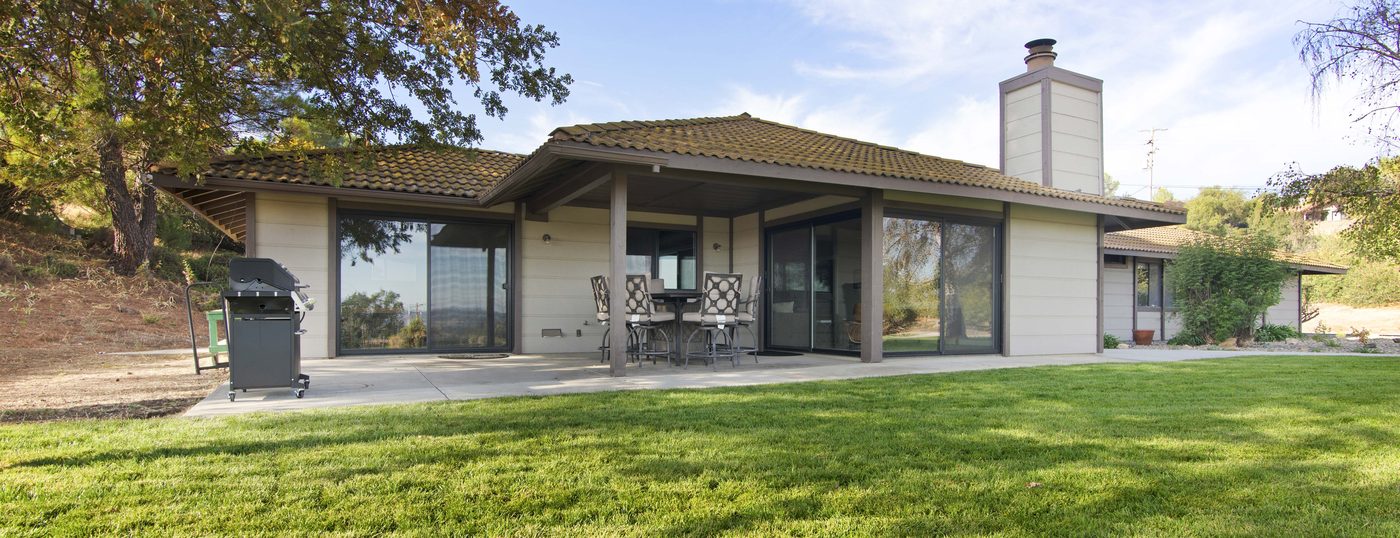
Buying a Home in Paso Robles
The local due diligence that a Paso Robles purchase actually requires, in the order it usually happens.
Buying a home in Paso Robles follows the same California purchase framework as anywhere else in the state: offer, acceptance, escrow, disclosures, inspections, loan approval, closing. What changes locally is the content of the due diligence — specifically, how much of it depends on whether the property is inside the city limits or in unincorporated San Luis Obispo County.
This page walks the process in the order it usually happens.
Start with location, not with listings
The most useful early decision is not price. It is how far out you want to be. In and around Paso Robles, distance from the city core correlates with almost everything else: lot size, utility type, road maintenance responsibility, insurance cost, emergency response time, and which agency regulates the property.
Before touring, it is worth being honest about two things: how much land you actually want to maintain, and what your daily driving tolerance is. Both are easy to underestimate from photographs.
Property type
A conventional home on city services, an older home near downtown, a hillside property with a well, and a parcel with planted vineyard are four different transactions with four different investigation lists. Deciding roughly which category you are in early saves considerable time.
If acreage or a rural parcel is on your list at all, read the rural property guide before you write an offer — the contingency periods you need are different.
Financing
Getting a written pre-approval from a lender before you shop is standard practice, and in a market where sellers weigh certainty as well as price, it matters.
Some Paso Robles properties raise financing questions that a standard suburban purchase does not. Lenders may treat a parcel differently depending on acreage, the presence of agricultural use or income, whether outbuildings contribute to value, whether water is from a private well, and whether the property is legally one parcel or several. Loan programs also differ in how they handle properties with significant land value relative to the residence. If any of those apply, tell your lender early rather than discovering it during underwriting.
This is general information, not financial advice. Terms, qualification standards and program availability vary by lender and change over time.
Inspections and property condition
A general home inspection is the baseline. Depending on the property, the useful additions commonly include:
- Roof inspection, particularly on older homes and outbuildings
- Wood-destroying pest inspection
- Sewer lateral or septic system inspection, depending on the wastewater type
- Well inspection, flow testing and water quality testing on well-served properties
- Structural, foundation or drainage evaluation where a general inspection raises a question
- Chimney, HVAC, pool and spa inspections where applicable
- Survey where boundaries, fencing or encroachments are unclear
Inspection reports describe condition; they do not tell you what a repair will cost. On older or rural properties it is often worth getting a contractor estimate during the contingency period rather than after.
Insurance
Insurance is not a formality on Central Coast property, and it should be investigated early rather than left to the week before closing. Availability and pricing can be affected by the property’s fire hazard severity zone designation, defensible space condition, roof and construction materials, distance to a responding fire station, and water availability for firefighting.
The practical step is to get a quote — not an estimate — from an insurance professional during your contingency period, on the specific address. Fire hazard severity zone designations for a given location can be checked through the California Office of the State Fire Marshal.
Utilities and services
Confirm, for the specific parcel: water source (city, community system, shared well, private well), wastewater (city sewer or onsite system), electricity, gas or propane, internet service options, trash and recycling service, and mail delivery. Inside the city these are usually straightforward. Outside it, none of them should be assumed.
Due diligence: the paperwork side
Alongside physical inspections, the document review usually includes:
- Preliminary title report and the underlying documents — easements, rights of way, deed restrictions, liens and any recorded agreements
- Seller disclosures, including the statutory California disclosures and any natural hazard disclosure report
- Permit history for the property, obtained from the City of Paso Robles Building Division or the county Planning and Building Department depending on jurisdiction
- Zoning and permitted use for the specific parcel, if you intend any use beyond a single residence
- HOA documents, where applicable
- Road maintenance agreements and any shared well agreements on rural property
- Williamson Act contract status, on agricultural parcels
Reading a preliminary title report is a task worth doing carefully rather than quickly. Easements in particular can affect where you can build, where others may drive, and what you are obligated to maintain.
Rural versus city property
The short version: in the city, a public agency delivers your water, treats your sewage, maintains your street and responds quickly to an emergency call. Outside it, some or all of that becomes your responsibility — and the associated systems become your inspection list. Neither is better. They are different, and the contingency period you need is longer for the second.
Closing
California purchases close through escrow. Between acceptance and closing you will typically complete inspections, review disclosures, remove contingencies in writing by their deadlines, finalize loan approval, arrange insurance, conduct a final walkthrough, sign documents and fund. The escrow officer coordinates; recording at the county completes the transfer.
The deadlines in a California residential purchase agreement are real and consequential. Track them.
Verify before you rely
Nothing on this page is legal, tax, financial, insurance or inspection advice. Permit requirements, zoning, hazard mapping and insurance availability change and vary by parcel. Confirm anything material with the appropriate agency or a qualified professional.
Published August 23, 2026 · Last reviewed August 23, 2026