Paso Robles Real Estate Guide
The property types found in and around Paso Robles — and the questions each one raises before you buy.
Paso Robles sits in northern San Luis Obispo County, on California’s Central Coast, where the Salinas River runs north through a valley framed by the Santa Lucia Range to the west and open rangeland to the east. The city itself is compact. The countryside around it is not. That combination is the single most useful thing to understand about real estate here: within a short drive you can move from a walkable block near the city park to a parcel where the nearest neighbor is a quarter mile away and the water comes from a well.
This guide is an overview of the property types found in and around Paso Robles, and of the questions each one tends to raise. It is written to orient you before you start looking, not to replace the property-specific investigation every purchase requires.
Property types in and around Paso Robles
Homes in established residential neighborhoods
Most homes inside the Paso Robles city limits sit in conventional residential subdivisions on city-sized lots. These properties are connected to city water and sewer, are served by city streets, and are subject to the City of Paso Robles zoning and building requirements rather than county requirements. For many buyers this is the simplest kind of purchase in the area: utilities are municipal, access is public, and the due diligence looks much like buying a home anywhere else in California.
Housing stock varies considerably by area and by decade of construction. Some neighborhoods are largely mid-century; others were built out much more recently. Rather than assuming a neighborhood’s character from its name, it is worth walking it at different times of day.
Downtown and near-downtown properties
The blocks around the downtown city park include some of the oldest residential building stock in the city, alongside commercial and mixed-use buildings. Buyers drawn to this area are usually buying walkability — proximity to the park, restaurants, tasting rooms and services.
Older homes near downtown raise their own questions: original wiring and plumbing, foundation type, additions completed with or without permits, and whether a property sits within a specific plan area or overlay that affects what can be done with it. The City of Paso Robles Planning Division is the authority on zoning and specific plan boundaries, and the Building Division holds permit history.
Luxury and estate properties
“Luxury” in Paso Robles is not a single product. It includes architect-designed homes on acreage, hilltop properties with long views, restored ranch houses, and residences on or adjacent to planted vineyard. What these properties share is that price is driven as much by land, setting and privacy as by the house itself — which means comparable sales are thinner and valuation is less mechanical than it is in a tract neighborhood.
Acreage and rural residential property
Outside the city limits, parcels get larger and services get sparser. A rural property may rely on a private well for water, an onsite wastewater treatment system (septic) for sewage, propane rather than natural gas, and a private or shared road for access. Each of those is a due-diligence subject in its own right.
Rural parcels in unincorporated San Luis Obispo County are governed by county land use regulation rather than city regulation, which changes both what is permitted and who you ask. Much of the area around Paso Robles also lies within the Paso Robles Area Subbasin of the Salinas Valley Groundwater Basin, which is managed under California’s Sustainable Groundwater Management Act. If a property draws water from a well, the basin context is relevant.
Equestrian and ranch property
Properties set up for horses or livestock add another layer: barns and outbuildings and whether they were permitted, fencing condition and placement relative to actual boundaries, water supply adequate for animals as well as household use, manure management, and whether the parcel’s zoning permits the number and type of animals you intend to keep.
Wine country property
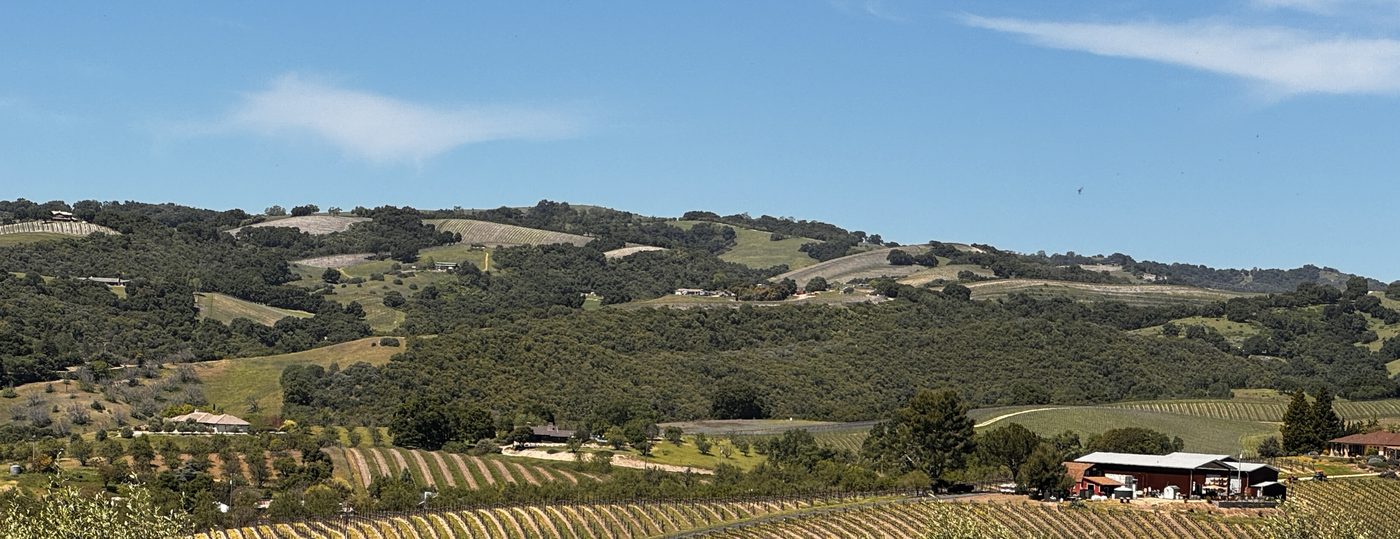
Some properties around Paso Robles include planted vineyard, and some are simply surrounded by it. The difference matters a great deal. A parcel with producing vineyard is, to some degree, an agricultural operation, with the costs, equipment, water demand, labor and contractual arrangements that implies. A parcel with a view of someone else’s vineyard is a residential purchase with a nice outlook — and no guarantee that the neighboring use stays the same.
Agricultural land may also be enrolled in a Williamson Act contract, which restricts use in exchange for reduced property tax assessment. Contract status, terms and any non-renewal filing should be confirmed through county records rather than assumed from a listing description.
Investment and income property
Paso Robles has long-term rental housing, second homes, small multi-unit buildings and permitted short-term rentals. Short-term rental use in particular is regulated, permit availability has been limited at times, and the rules differ depending on whether a property is inside the city limits or in the unincorporated county. Nothing about a property’s current or past use guarantees that the same use is available to a new owner.
What actually differs between these properties
Rather than sorting properties by price, it is often more useful to sort them by the questions they raise. Five factors do most of the work:
- Jurisdiction. City of Paso Robles or unincorporated San Luis Obispo County. This determines zoning rules, permit processes, code enforcement and, frequently, short-term rental eligibility.
- Water. City water, a community water system, a shared well, or a private well — each with different reliability, cost and testing considerations.
- Wastewater. City sewer or an onsite system. Onsite systems have capacity limits tied to bedroom count and require inspection and maintenance.
- Access. A public street maintained by a public agency, or a private or shared road with a maintenance agreement — or, sometimes, no written agreement at all.
- Insurability. Fire hazard severity zone designation, defensible space, distance to a responding fire station and water availability all affect what insurance is available and at what cost.
A note on what this guide can and cannot tell you
Zoning, permit availability, groundwater regulation, hazard zone mapping and tax treatment all change over time, and they vary parcel by parcel. Nothing here is legal, tax, engineering, insurance or inspection advice. Verify anything that affects your decision with the City of Paso Robles, San Luis Obispo County, or a qualified professional in the relevant field.
Choosing an area
Buyers commonly start with a price range and a property type. In Paso Robles it is often more productive to start with two other questions: how much land do you actually want to be responsible for, and how far from services are you willing to live? A five-acre parcel is a different weekly commitment than a quarter-acre lot, regardless of what the house looks like. And the practical difference between a ten-minute and a thirty-minute drive to a grocery store compounds daily.
From there, the local terminology — downtown, westside, eastside, wine country — becomes useful shorthand. It is informal shorthand, though, not a set of legal boundaries.
Published August 23, 2026 · Last reviewed August 23, 2026